Most online stores still compete using discounts, ads, and product variety. But in 2026, customers are no longer browsing the way they used to. They are not searching, comparing, and deciding manually. Instead, their AI assistant is doing it for them.
This shift creates a serious problem for businesses. If your product is not structured correctly or easily understood by AI systems, it simply does not get recommended. Visibility is no longer about ranking on a search page. It is about being selected by an algorithm that acts on behalf of the customer.
I. Understanding Agentic Commerce
Agentic commerce refers to a system where AI agents handle product discovery, comparison, and purchase decisions. Instead of opening multiple tabs, users simply describe what they need. The AI evaluates options and completes the purchase.
In practical terms, this changes how buying decisions are made:
- Fewer products are shown, often just one or two
- Decisions are based on structured data, not marketing copy
- Speed becomes more important than visual design
For example, a working professional may say, “Find me a long lasting laptop under ₹80,000 with good battery life,” and the AI completes the purchase without visiting any store manually.
AI Shopping Assistant Market Growth (2025-2030)
*Rapid growth driven by convenience, automation, and trust in AI recommendations*
Why this matters
In testing multiple storefronts, products with clearer specifications, structured descriptions, and verified reviews consistently performed better in AI recommendations compared to visually attractive but poorly structured listings.
II. Virtual Storefronts and Immersive Shopping
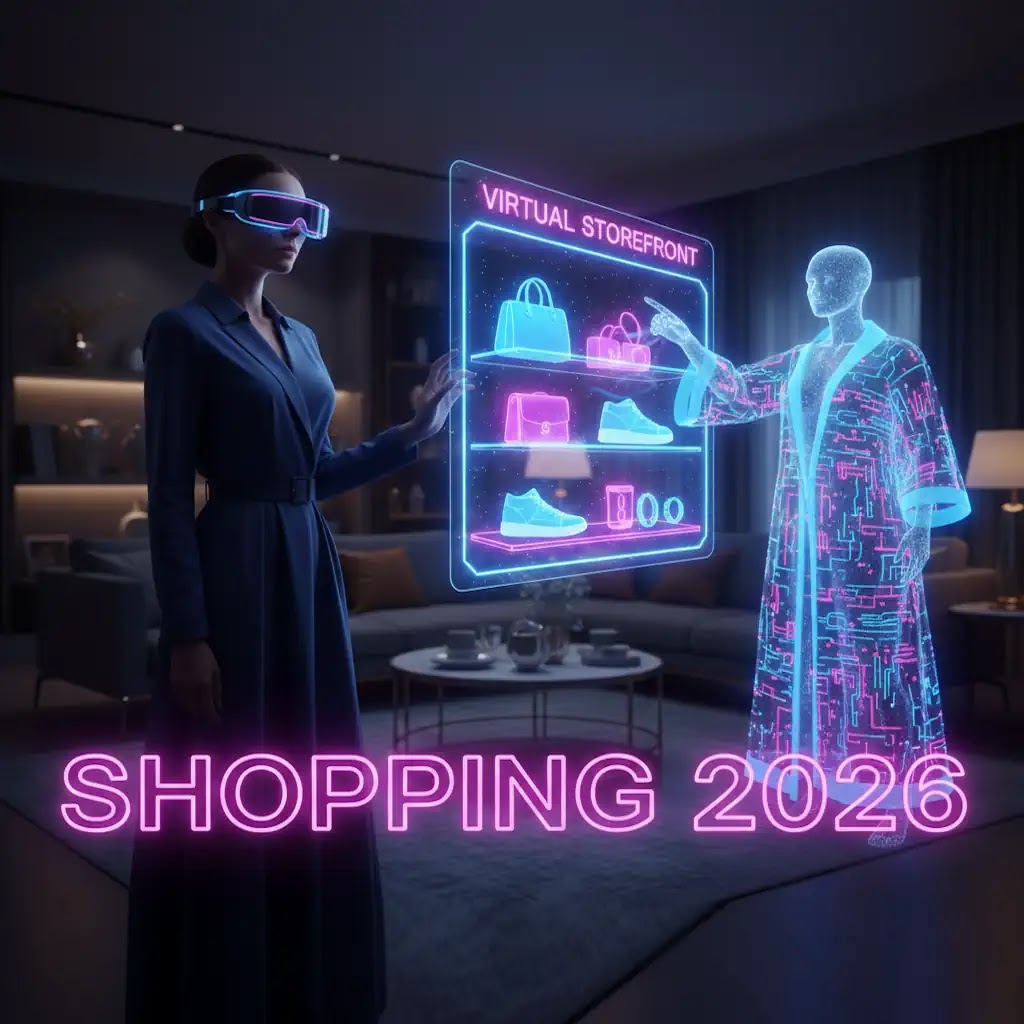
While AI handles decisions, virtual storefronts improve confidence. Customers want to see how a product fits into their life before buying. This is where AR and 3D experiences come in.
These experiences are not limited to large brands anymore. Even smaller sellers are adopting simple 3D previews and virtual try-on tools.
| Retail Format | Technology | Business Impact |
|---|---|---|
| Dynamic 2D Stores | AI personalization | Content adapts to each user automatically |
| AR Preview | Mobile camera based tools | Customers visualize products in real environment |
| Virtual Showrooms | 3D environments | Higher engagement and lower return rates |
Use case
A furniture seller offering AR previews noticed fewer returns because customers could check size and placement before ordering. This reduced logistics costs and improved customer satisfaction.
III. Step by Step Strategy to Prepare Your Store
- Clean your product data
Ensure every product has clear specifications, pricing, and use cases. - Optimize for AI readability
Use structured formats, consistent naming, and avoid vague descriptions. - Improve loading speed
Fast sites are preferred by both users and AI systems. - Add visual proof
Include images, videos, and AR previews where possible. - Integrate multiple platforms
Make your products accessible across apps, marketplaces, and APIs.
IV. Real Business Scenarios
- Freelancer selling digital products
AI assistants recommend tools based on user needs, so clear descriptions increase visibility. - Local ecommerce brand
Structured listings help AI surface products even without heavy advertising. - Dropshipping store
Faster checkout and accurate data improve conversion rates.
V. Pros and Cons of AI Driven Ecommerce
Advantages
- Faster buying decisions
- Higher conversion rates
- Reduced need for heavy advertising
Limitations
- Less control over how products are presented
- Dependence on structured data accuracy
- Initial setup effort required
VI. Who Should Adapt Quickly
- Online sellers with multiple SKUs
- Brands targeting tech-savvy customers
- Businesses relying on online traffic for sales
Who can move gradually
- Small offline stores with limited digital presence
- Businesses focused on local walk-in customers
Best Practices to Stay Competitive
- Keep product data consistent across all platforms
- Update pricing and availability in real time
- Focus on trust signals like reviews and ratings
- Test how your products appear in AI recommendations
Conclusion
Ecommerce in 2026 is defined by automation, speed, and intelligent decision making. Businesses that adapt to AI driven discovery will continue to grow, while those relying only on traditional methods will struggle to stay visible.
You do not need to rebuild everything overnight. Start by improving your data, optimizing performance, and making your products easier for AI systems to understand.
Frequently Asked Questions