If you have ever opened 8 tabs to compare flights, checked hotel reviews manually, and still felt unsure before booking, you are not alone. Travel planning used to consume hours, sometimes days. In 2026, that approach is inefficient. The real problem is not lack of options, it is overload without automation.
This is where AI travel agents change the game. Instead of searching, comparing, and booking yourself, you define your intent once and let an intelligent system handle the execution. From finding the best flights to reserving hotels and even adjusting plans if something changes, a properly configured agent works like a personal travel manager available 24×7.
This guide explains how to build a reliable AI agent for travel booking, how it works internally, and how to use it safely in real-world scenarios.
What an AI Travel Agent Actually Does in 2026
An AI travel agent is not just a chatbot. It is a system that can take actions. It connects with live APIs, reads your preferences, compares options, and completes bookings with your approval.
- Search Automation: Scans flights, hotels, and transport options across multiple platforms instantly
- Decision Support: Suggests best options based on budget, comfort, and past behavior
- Execution: Completes bookings and payments after confirmation
- Monitoring: Tracks delays, cancellations, and price drops automatically
In practical use, this means you can say, “Plan a 4-day trip to Dubai under my budget,” and the system handles everything from itinerary to booking.
Why AI Agents Are Replacing Manual Booking
Travel decisions involve multiple variables like pricing, timing, comfort, and reviews. Humans struggle to optimize all of these at once. AI agents handle this efficiently because they process real-time data continuously.
| Feature | Manual Booking | AI Agent Booking |
|---|---|---|
| Speed | Hours of comparison | Results in minutes |
| Accuracy | Prone to human oversight | Data-driven decisions |
| Flexibility | Manual changes required | Auto-adjustments in real time |
Step-by-Step: Setting Up Your AI Travel Agent
Step 1: Define Your Travel Preferences Clearly
The biggest mistake beginners make is giving vague instructions. Your agent performs better when it has structured preferences.
- Budget range per trip
- Preferred airlines or hotels
- Seat type, meal preference, or comfort requirements
- Travel style, budget, luxury, or balanced
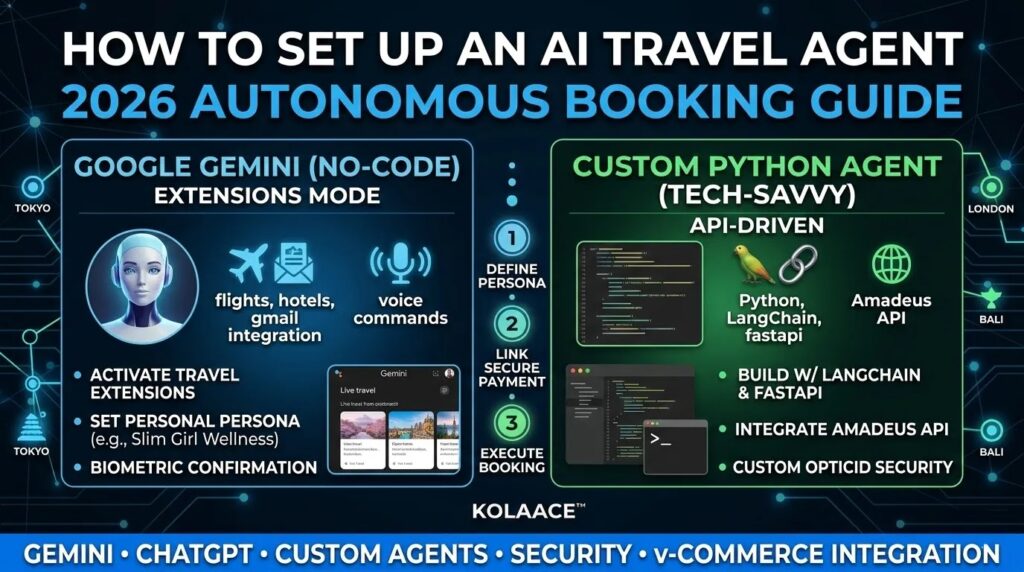
Step 2: Choose Your Platform
You can build your agent using different platforms depending on your technical level.
- No-code: Gemini or ChatGPT agent mode
- Low-code: Zapier with API integrations
- Advanced: Custom stack using LangChain and FastAPI
Step 3: Connect Data Sources
This is where your agent becomes powerful. Connect it to real-time data sources.
- Flight APIs
- Hotel booking platforms
- Email for ticket tracking
- Calendar for scheduling
Step 4: Enable Action Permissions
Your agent must be able to act, not just suggest. Set up controlled permissions.
- Booking approvals
- Payment authorization
- Change or cancellation rights
Step 5: Add Human Confirmation Layer
Always keep a final approval step before payments. This prevents errors and builds trust in the system.
Real-World Use Cases
1. Business Travel Automation
Professionals traveling frequently can automate repetitive bookings. The agent learns preferred airlines, hotels, and timings, reducing planning time drastically.
2. Family Vacation Planning
For families, the agent balances budget, comfort, and child-friendly options. It can also align schedules for multiple members.
3. Small Business Travel Management
Startups and small businesses use AI agents to reduce dependency on travel agencies. This cuts costs and improves speed.
Pros and Cons of AI Travel Agents
Advantages
- Massive time savings
- Better price optimization
- Real-time updates and alerts
- Personalized recommendations
Limitations
- Requires proper setup
- Needs human oversight for payments
- Dependent on API accuracy
Who Should Use This and Who Should Avoid
Best suited for:
- Frequent travelers
- Busy professionals
- Small business owners managing travel expenses
Not ideal for:
- Users uncomfortable with automation
- People who prefer manual control over every step
Best Practices for Reliable Performance
- Start with small tasks before full automation
- Always review bookings before payment
- Keep your preferences updated
- Use secure payment methods
- Monitor agent activity logs regularly
Final Takeaway
Setting up an AI travel agent is no longer a luxury, it is becoming a standard productivity tool. The real advantage is not just convenience, it is consistency. Once configured properly, your agent delivers better decisions every time without fatigue or oversight.
If you invest a few hours in setting it up correctly, you can save dozens of hours on every trip going forward.
Frequently Asked Questions