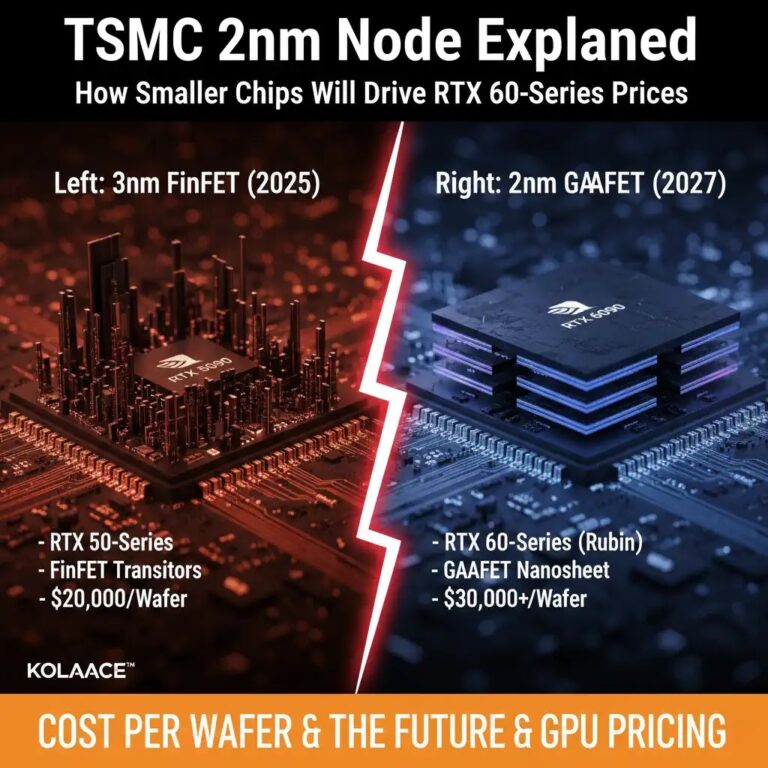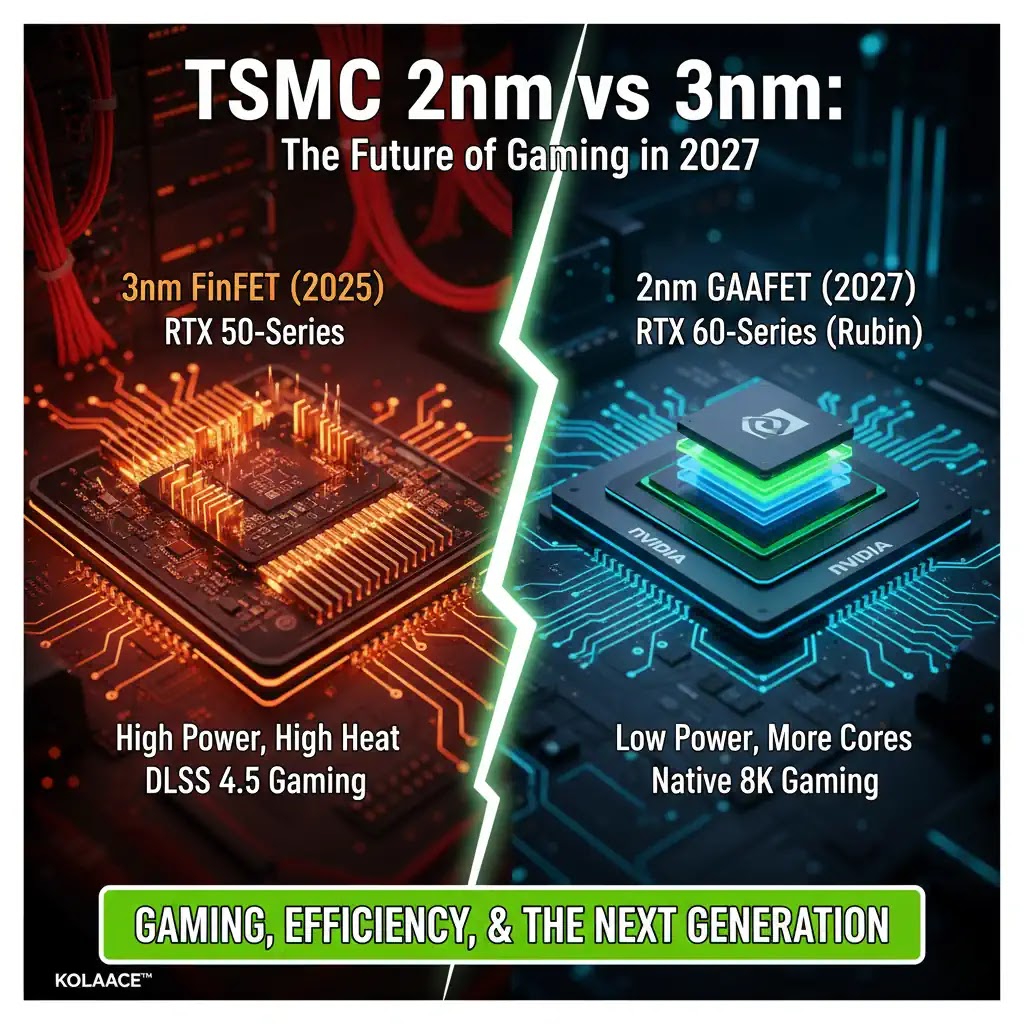
Most gamers focus on GPU model names, VRAM, or clock speeds. But the real performance jump in the next generation will come from something less visible, the manufacturing process. If your system runs hot, consumes too much power, or struggles with ray tracing, the reason often starts at the silicon level.
The transition from TSMC 3nm to 2nm is not just a routine upgrade. It changes how transistors behave, how efficiently power is used, and how much raw performance can be packed into a single chip. For gamers planning a future upgrade, understanding this shift is critical before spending money on high-end hardware.
What “Node Shrink” Actually Means in Gaming
The term “node shrink” refers to reducing the size of transistors on a chip. Smaller transistors allow more components to fit into the same area, which leads to:
- Higher processing power
- Better energy efficiency
- Lower heat generation per operation
However, this scaling is no longer as simple as it was a decade ago. At 3nm and below, physics becomes a limitation. Leakage currents, heat density, and manufacturing complexity all increase. That is why the jump to 2nm is not just about shrinking size, but about redesigning the transistor itself.
The 3nm Reality: Strong but Power Hungry
Current high-end GPUs and CPUs built on 3nm deliver excellent performance, but they come with practical limitations. FinFET technology, which powers 3nm chips, is reaching its efficiency ceiling.
Real-world observations from 3nm systems
- High-end GPUs often exceed 400W under full load
- Thermal throttling becomes common in compact builds
- Power supplies need to be over-specced for stability
In hot environments like many parts of India, this becomes a serious issue. Without proper airflow or cooling, performance drops over long gaming sessions. This is why many gamers notice inconsistent frame rates even on powerful hardware.
The 2nm Shift: Why GAAFET Changes Everything
The biggest upgrade in 2nm technology is the move from FinFET to GAAFET. Instead of controlling the channel from three sides, GAAFET surrounds it completely. This gives much tighter control over current flow.
Practical benefits for gaming hardware
- Lower power leakage, which directly reduces heat
- Higher performance at the same voltage
- More transistors, enabling advanced AI and ray tracing units
From a real usage perspective, this means smoother gameplay with fewer thermal spikes. Instead of brute force power increases, 2nm chips focus on smarter efficiency.
Performance and Efficiency Scaling
Future refinements will further improve efficiency without increasing power draw.
Gaming Impact: What You Will Actually Notice
1. More Stable Frame Rates
Instead of short bursts of high FPS followed by drops, 2nm chips will maintain consistent performance over longer sessions.
2. Lower System Heat
Even mid-range builds will feel cooler. This is especially useful for users without air-conditioned setups.
3. Better Ray Tracing Performance
More transistor density allows GPU manufacturers to add more dedicated cores, improving lighting realism without massive FPS loss.
4. Smaller and More Efficient Builds
Compact gaming PCs and laptops will benefit the most. Less heat means less need for bulky cooling systems.
| Metric | 3nm Systems | 2nm Systems |
|---|---|---|
| Thermal Efficiency | Moderate | High |
| Power Consumption | High | Reduced |
| Gaming Stability | Variable | Consistent |
Use Cases: Who Benefits the Most
Best fit users
- Gamers targeting 4K or 8K resolution
- Content creators using GPU-heavy workflows
- PC builders focusing on efficiency and longevity
Who can skip waiting
- 1080p or casual gamers
- Users upgrading from very old hardware
- Budget-focused buyers
Pros and Cons of Waiting for 2nm
Advantages
- Better efficiency and lower electricity usage
- Improved thermal performance
- Future-ready architecture
Limitations
- Higher initial cost
- Limited availability at launch
- Early generation may have supply constraints
Best Practices Before Upgrading
- Evaluate your current system bottleneck before upgrading
- Do not overspend on power supply if waiting for efficient chips
- Focus on airflow and cooling even with future hardware
- Track real benchmarks instead of marketing claims
Final Takeaway
If you need an upgrade today, 3nm hardware is still powerful and capable. But if your goal is long-term performance with better efficiency, waiting for 2nm hardware is a smarter move. The transition is not just incremental, it represents a structural shift in chip design.
Frequently Asked Questions