
Most remote workers thought flexibility was the final goal. Work from home, fewer commutes, more control. But by 2026, a new problem became clear. Productivity plateaued, collaboration felt artificial, and constant notifications reduced deep work.
This is where the next phase begins. Remote work is no longer about location freedom alone. It is about performance, presence, and intelligent systems working alongside you. The shift is subtle but powerful. Instead of adapting to tools, tools now adapt to you.
At KOLAACE™, we have analyzed how professionals, freelancers, and small business owners are evolving their workflows. The biggest change is simple. High performers are not working harder. They are working with smarter systems.
I. From 2D Screens to Spatial Productivity
Traditional laptops and dual monitors solved early remote work problems, but they also created limits. Screen space, constant tab switching, and visual fatigue reduce efficiency over time.
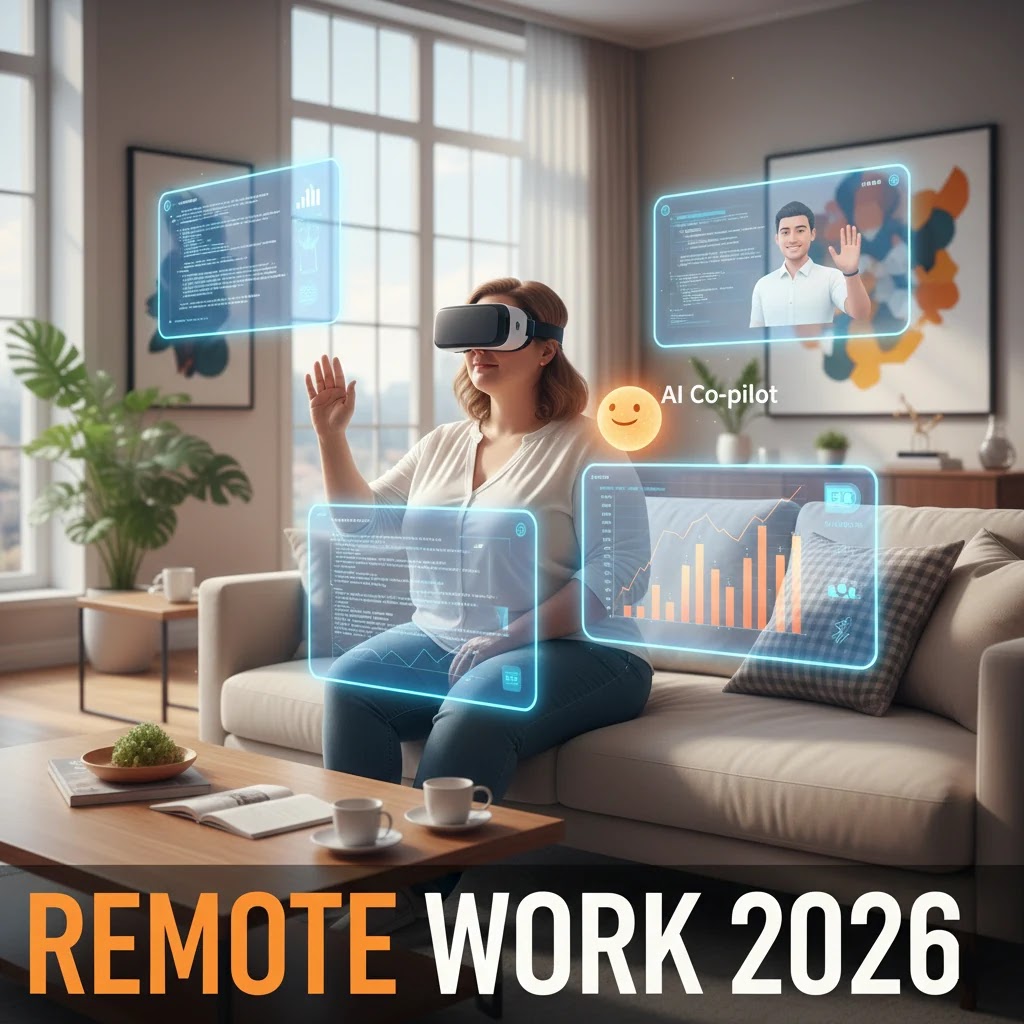
In 2026, spatial computing removes these limitations. Instead of working inside a screen, your workspace surrounds you.
What changes in real usage
- You can place multiple virtual screens anywhere in your room
- Important documents stay visible without switching tabs
- Meetings feel more natural with 3D presence instead of flat video
For example, a freelancer working from a small home setup can simulate a full office environment. Designers review large layouts, developers monitor multiple dashboards, and consultants manage calls without clutter.
Remote Work Efficiency: VR vs Traditional Setup
*Based on deep work time and output consistency*
II. AI Co-pilots: From Assistants to Decision Partners
Earlier AI tools were reactive. You asked, they responded. That model is outdated.
In 2026, AI co-pilots operate proactively. They analyze your work patterns, predict needs, and act before you even think about the task.
What they actually do daily
- Prepare meeting summaries without attending manually
- Draft emails based on your communication style
- Organize tasks based on deadlines and priority
- Filter distractions during focus sessions
| Function | Traditional Method | AI Co-pilot Approach |
|---|---|---|
| Meetings | Manual attendance | Auto summaries and highlights |
| Task Planning | To-do lists | Predictive scheduling |
| Focus | Self discipline | Smart interruption blocking |
Real impact
Many professionals report saving 2 to 4 hours daily. Not by working faster, but by removing unnecessary work completely.
III. The Rise of the Sovereign Worker
The traditional job model is changing rapidly. Skilled individuals now operate independently, supported by technology.
This new category is called the sovereign worker. These professionals are not limited by geography, company structure, or fixed schedules.
How this works in practice
- Multiple income streams: Handling projects from different clients globally
- AI leverage: One person doing the work of a small team
- Flexible scheduling: Working based on energy, not fixed hours
For small business owners, this is a major advantage. Instead of hiring full teams, they can collaborate with high skill individuals on demand.
Use cases
- Startup founders outsourcing design, marketing, and tech tasks
- Freelancers scaling income without hiring employees
- Consultants offering micro services instead of long contracts
IV. Pros and Limitations of Remote Work 2026
Advantages
- Higher productivity with AI assistance
- Global opportunities regardless of location
- Reduced operational costs for businesses
- Better work life balance when managed correctly
Challenges
- Initial cost of advanced tools like VR headsets
- Learning curve for new technologies
- Risk of over automation reducing human interaction
- Need for strong self management discipline
V. Who Should Adopt This Model
Best fit
- Freelancers and consultants
- Startup founders
- Remote teams and digital agencies
- Knowledge workers like developers, designers, analysts
Not ideal for
- Roles requiring physical presence
- People uncomfortable with digital tools
- Those who prefer structured office environments
VI. Best Practices to Stay Competitive
- Invest in the right tools: Focus on productivity, not trends
- Build a personal system: Combine AI tools with your workflow
- Protect deep work time: Limit meetings and distractions
- Continuously upgrade skills: Technology evolves quickly
VII. Final Takeaway
Remote work in 2026 is no longer about convenience. It is about leverage.
The combination of spatial computing and AI co-pilots creates a new type of worker. Faster, more focused, and highly independent.
If you adapt early, you gain a clear advantage. If you ignore it, the gap will only increase.
Frequently Asked Questions
