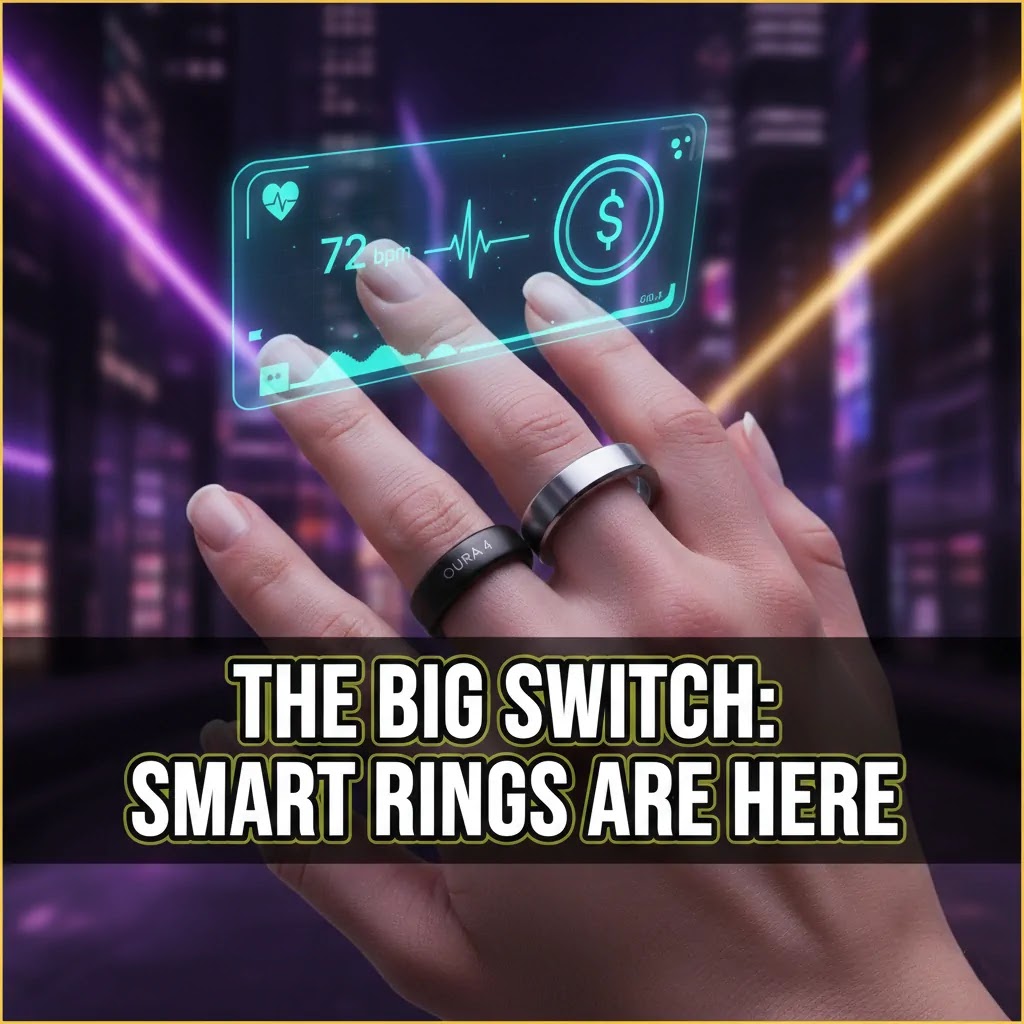
Most people did not stop using smartwatches because they disliked them. They stopped because of friction. Daily charging, constant notifications, bulky design, and too much screen dependency slowly reduced their usefulness. In 2026, users are clearly moving toward a quieter and more practical alternative, smart rings.
This shift is not just about fashion. It is about reducing digital noise while keeping essential health tracking active in the background. Devices like the Oura Ring 4 and Samsung Galaxy Ring are leading this transition by offering accurate biometrics, long battery life, and zero screen distraction. For many users, especially professionals and creators, this feels like a smarter upgrade rather than a downgrade.
I. What Is Driving the Smart Ring Revolution in 2026
The demand for smart rings is increasing due to three clear changes in user behavior. After analyzing multiple devices and real usage patterns, these are the core reasons behind this shift.
1. Passive Health Tracking Is Now Preferred
Users no longer want to open apps repeatedly to check stats. Smart rings track sleep, heart rate, HRV, and recovery automatically without interaction. This passive approach improves consistency and accuracy.
2. Battery Life Finally Feels Practical
Charging a smartwatch daily is a real problem. Smart rings typically last 6 to 12 days depending on usage. In real scenarios, this means fewer interruptions and better long term data tracking.
3. Minimal Design Fits Every Lifestyle
Unlike watches, rings do not interfere with clothing, workouts, or sleep. For Indian users dealing with heat and long working hours, comfort becomes a major advantage.
II. Oura Ring 4 Deep Analysis: Accuracy Over Everything
The Oura Ring 4 focuses heavily on precision and long term health insights. After testing similar devices, one clear advantage stands out, data consistency during sleep and recovery tracking.
Key Strengths of Oura Ring 4
- Adaptive Sensor System: Uses multiple sensors to maintain accuracy even with finger movement.
- Sleep Tracking Leadership: Provides detailed sleep stages, recovery score, and readiness analysis.
- AI Recommendations: Suggests lifestyle adjustments based on real data, not generic tips.
- Premium Build: Ceramic finish feels durable and comfortable for long wear.
Real Use Case
For a content creator working late nights, Oura can detect poor sleep quality and suggest recovery periods. Over time, this improves productivity because decisions are based on biological data, not guesswork.
Limitation
The subscription model adds recurring cost. For long term users, this becomes a deciding factor.
III. Samsung Galaxy Ring: Practical Choice for Mass Users
The Samsung Galaxy Ring takes a different approach. Instead of focusing only on premium analytics, it focuses on accessibility and ecosystem integration.
Why Galaxy Ring Is Growing Fast
- No Subscription: One time purchase makes it budget friendly.
- Galaxy Ecosystem: Works smoothly with Samsung phones, health apps, and AI features.
- Balanced Performance: Good accuracy for daily tracking without complexity.
Real Use Case
For small business owners or professionals who need simple health tracking without deep analytics, Galaxy Ring offers a practical solution. It does the job without adding complexity or extra cost.
IV. Feature Comparison: Smart Rings vs Smartwatches
| Category | Smart Ring | Smartwatch |
|---|---|---|
| Battery | 6 to 12 Days | 1 to 2 Days |
| Comfort | Very High | Moderate |
| Screen Dependency | None | High |
| Health Accuracy | Better for sleep | Better for workouts |
V. Pros and Cons of Smart Rings
Pros
- Long battery life
- Comfortable for 24 hour wear
- Better sleep tracking accuracy
- Minimal distraction
Cons
- No display for real time interaction
- Limited workout tracking compared to watches
- Premium models can be expensive
VI. Who Should Use Smart Rings and Who Should Avoid
Best For
- Professionals who want passive health tracking
- Users tired of constant notifications
- People focused on sleep and recovery
Not Ideal For
- Fitness enthusiasts needing real time workout stats
- Users who rely on smartwatch apps and notifications
VII. Best Practices Before Buying a Smart Ring
- Choose the correct size carefully, resizing is difficult
- Check app compatibility with your phone
- Understand subscription costs before purchase
- Focus on your main goal, health tracking or payments
VIII. Conclusion: Are Smart Rings Replacing Smartwatches
Smart rings are not completely replacing smartwatches yet. Instead, they are redefining how wearable technology fits into daily life. For users who value simplicity, long battery life, and accurate health tracking, rings are becoming the preferred choice.
The key takeaway is simple. If your goal is less screen time and better health awareness, a smart ring is a strong upgrade. If you need interactive features, a smartwatch still has its place.
Frequently Asked Questions (FAQ)