Choosing a premium smartphone in 2026 is no longer just about brand loyalty. Many users are now stuck between two very different philosophies. Do you go for an ultra thin, lightweight phone that feels effortless in daily use, or a feature packed device that focuses heavily on AI, camera power, and advanced capabilities?
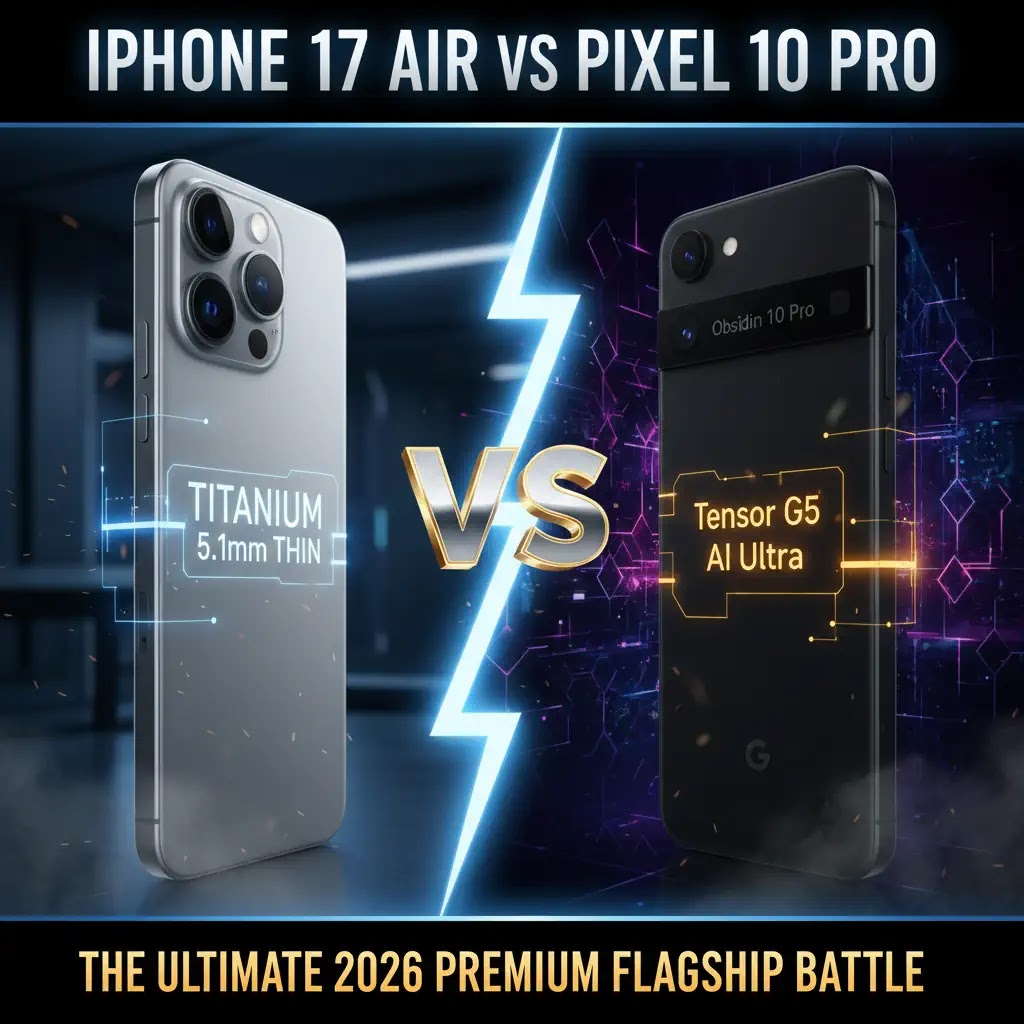
This is exactly where the iPhone 17 Air and Google Pixel 10 Pro stand apart. Both are flagship devices, but they solve different real world problems. If you are planning to invest in a premium phone this year, understanding these differences can save you from an expensive mistake.
Quick Comparison: Key Specifications
Before going deep, here is a clear overview of how both devices compare on core specifications.
| Feature | iPhone 17 Air | Google Pixel 10 Pro |
|---|---|---|
| Display | 6.6″ ProMotion OLED 120Hz | 6.7″ LTPO Actua 1 to 120Hz |
| Processor | A19 Chip 2nm | Tensor G5 TSMC |
| Design | 5.1mm Ultra Thin Titanium | Ceramic Alloy Premium Build |
| Camera | 48MP Dual System | Triple Camera with 5x Zoom |
| Software | iOS 19 with Apple Intelligence | Android 16 with Gemini AI |
Design and Daily Use Experience
The biggest difference becomes clear the moment you hold these phones.
iPhone 17 Air: Built for comfort
This phone is designed for people who use their device continuously throughout the day. Whether you are scrolling social media, attending calls, or managing business apps, the ultra slim body reduces hand fatigue. In real usage, this matters more than most people expect.
- Feels extremely light in pocket and hand
- Easy to use for long durations
- Minimalist design with clean finish
Google Pixel 10 Pro: Built for power users
This device feels solid and premium. It is slightly heavier, but that weight comes with added capability. The camera module, AI processing, and battery management are tuned for users who demand more from their phone.
- Better grip due to thicker body
- More space for hardware features
- Ideal for content creators and professionals
Performance and AI Capabilities
In 2026, raw performance is no longer the only metric. The real difference comes from how intelligently the phone assists you.
A19 Chip Experience
The A19 chip focuses on efficiency. Apps open instantly, multitasking is smooth, and battery usage remains stable even with heavy usage. This is especially useful for business users who rely on consistent performance throughout the day.
Tensor G5 Real World Advantage
Tensor G5 focuses heavily on AI driven features. For example:
- Real time voice translation during calls
- Advanced photo editing without external apps
- Context aware suggestions based on usage patterns
Camera Performance in Real Scenarios
Camera comparison is not just about megapixels. It is about how the phone performs in real situations.
iPhone 17 Air
Delivers consistent and natural photos. Ideal for:
- Social media posts
- Video recording with stable colors
- Quick point and shoot moments
Pixel 10 Pro
Excels in computational photography. Ideal for:
- Low light photography
- Zoom shots up to long distance
- Professional level editing directly on phone
Use Cases: Which One Fits Your Lifestyle
Instead of asking which phone is better, ask which one fits your usage.
- For students and casual users: iPhone 17 Air is easier to handle and maintain
- For business owners: A19 efficiency ensures reliable performance all day
- For photographers and creators: Pixel 10 Pro offers more control and flexibility
- For tech enthusiasts: Pixel AI features feel more experimental and advanced
Pros and Cons
iPhone 17 Air
- Pros: Lightweight, excellent battery efficiency, smooth ecosystem
- Cons: Limited camera flexibility, fewer AI customization features
Pixel 10 Pro
- Pros: Powerful AI tools, versatile camera, feature rich experience
- Cons: Slightly heavier, battery may vary with heavy AI usage
Best Practices Before Buying
- Always test device weight and grip in store if possible
- Check software ecosystem compatibility with your current devices
- Evaluate your daily usage, not just specs
- Consider long term software updates and resale value
Final Verdict
If your priority is comfort, portability, and long lasting performance, the iPhone 17 Air is a smart investment. It fits perfectly into daily life without feeling bulky.
If you want cutting edge AI features, advanced camera control, and a more powerful overall experience, the Pixel 10 Pro is the better choice.
The best phone is not the one with more features. It is the one that matches how you actually use it every day.
Frequently Asked Questions