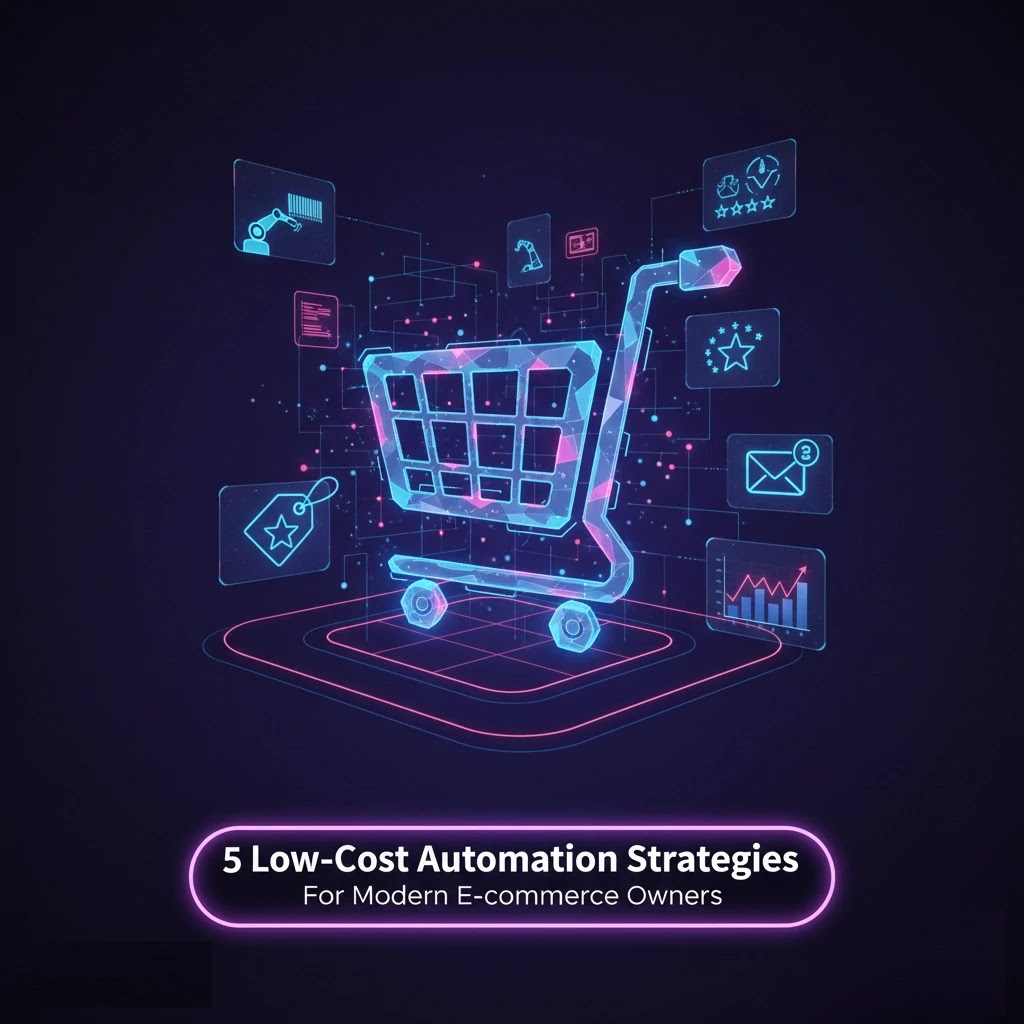
Running a successful online store in 2026 doesn’t require a massive team; it requires a smart system. We have identified five low-cost automation strategies that allow small e-commerce owners to compete effectively with retail giants. By leveraging these digital insights, you can scale your operations and drive sustainable growth with minimal overhead.
1. AI-Driven Inventory Forecasting
Overstocking and stockouts are the biggest profit killers for emerging brands. Modern AI tools now offer predictive analytics that sync directly with your sales data. These tools can predict seasonal spikes with high accuracy, ensuring your capital is always invested in high-turnover products.
Efficiency Tip: Use automated alerts to notify suppliers the moment your stock hits a specific threshold—eliminating the need for manual intervention and reducing the risk of human error.
2. Hyper-Personalized Email Flows
Static newsletters have lost their effectiveness. In 2026, automation allows you to trigger emails based on exact user behavior—such as hovering over an image or clicking a specific size. These “behavioral triggers” have a significantly higher conversion rate than standard marketing blasts.
Efficiency is the primary driver of profit in 2026. These low-cost automation strategies allow modern e-commerce owners to scale rapidly without increasing overhead. Implementing these tools is the first step toward a self-sustaining business model.
3. Automated Customer Social Proof
Trust is the ultimate currency of the web. Automate your review collection process by scheduling requests to send exactly 48 hours after delivery. Using AI to filter and highlight the most positive reviews on your homepage can boost buyer confidence and sales conversion rates instantly.
4. Dynamic Pricing Engines
In a fast-moving market, your prices shouldn’t remain static. Low-cost AI scripts can now monitor your competitors and adjust your prices in real-time. This ensures you remain the most attractive option for price-sensitive customers while protecting your profit margins during low-competition periods.
5. Self-Service Returns & Support
Customer service can consume hours of your productive day. By implementing an automated returns portal, customers can print their own labels and track their refunds without ever needing to contact support. This creates a premium digital experience that rivals top-tier global brands.
Final Thoughts: Automating for the Future
The secret to modern business is to work smarter, not harder. These five strategies are the building blocks for an automated digital empire that generates revenue while you focus on high-level strategy and creative growth. The future of e-commerce is automated—ensure your business is ready.
Follow our blog for more insights into the future of digital business!