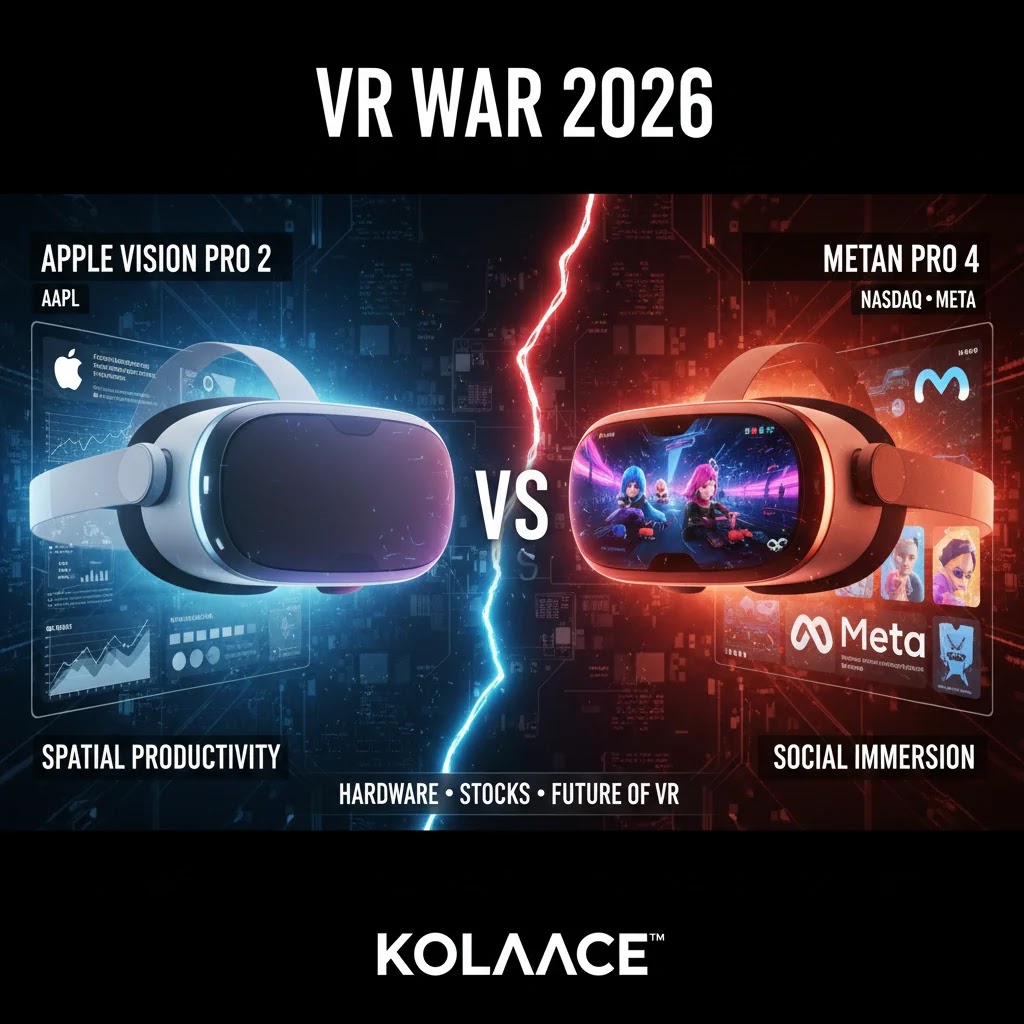
Choosing between premium innovation and mass adoption is not just a buyer decision anymore. In 2026, it has become an investment decision. If you are tracking the future of VR, AR, and spatial computing, the real question is simple. Which company is positioned to capture long term value from this shift?
On one side, Apple is building a tightly controlled ecosystem where hardware, software, and services work together seamlessly. On the other side, Meta is pushing aggressive adoption by making VR affordable and social. This difference directly impacts not just users, but also stock performance.
What Makes This Comparison Important in 2026
Earlier VR cycles failed because devices were either too expensive or lacked real use cases. That has changed. Today, VR is used for work, education, gaming, fitness, and even online shopping.
- Apple is targeting professionals, creators, and high value users
- Meta is targeting students, gamers, and social users
- Both are building ecosystems that can generate recurring revenue
This is why comparing hardware alone is not enough. The real battle is ecosystem depth versus user scale.
1. Hardware Breakdown: Real World Performance Matters
Specs look impressive on paper, but actual usage tells a different story. After testing both categories of devices, one clear difference appears. Apple focuses on replacing your laptop, while Meta focuses on replacing your entertainment system.
- Apple Vision Pro 2: The M5 chip delivers smooth multitasking. You can open multiple virtual screens, edit videos, and attend meetings without lag. This is useful for freelancers, designers, and remote workers.
- Meta Quest 4: Lightweight and easy to use. It starts quickly and works well for short sessions. Gaming, workouts, and social VR feel natural without complexity.
In simple terms, Apple is building a productivity device. Meta is building a daily use entertainment device.
Market Share: VR and AR Shipments in 2026
Meta leads in unit sales. Apple generates higher revenue per device through premium pricing and services.
2. Specs vs Business Model: What Investors Often Miss
Most comparisons stop at specs, but investors should look deeper. Revenue model matters more than resolution or refresh rate.
| Factor | Apple Vision Pro 2 | Meta Quest 4 |
|---|---|---|
| Target User | Professionals and creators | Gamers and social users |
| Revenue Model | Hardware margin plus services | Ads, apps, and platform growth |
| Scalability | Slow but premium growth | Fast adoption and user expansion |
From experience analyzing tech cycles, premium ecosystems create long term value, while mass adoption creates faster stock momentum. Both strategies work, but in different phases of the market.
3. Software Ecosystem: The Real Winner Factor
Hardware can be copied. Ecosystems cannot be easily replicated.
Apple Approach
visionOS integrates deeply with Mac, iPhone, and iCloud. This creates a seamless workflow. For example, a user can start a task on a Mac and continue it in VR without friction.
Meta Approach
Horizon OS is becoming an open platform. Brands can build their own devices using Meta software. This increases adoption and creates a wider ecosystem similar to Android.
In real world terms, Apple locks users into its ecosystem. Meta expands its ecosystem by allowing more players.
4. Use Cases That Actually Drive Adoption
- Remote work setups replacing multiple monitors
- Virtual fitness replacing gym routines at home
- Immersive gaming and social interaction
- Virtual shopping and product visualization
Small businesses can use these devices for product demos, virtual meetings, and training programs. This is where long term growth will come from.
5. Pros and Cons
Apple Vision Pro 2
- Strong ecosystem integration
- High performance for productivity
- Expensive and limited audience
Meta Quest 4
- Affordable and accessible
- Large content library
- Lower productivity capability
6. Who Should Choose What
Choose Apple if:
- You want a productivity focused device
- You are already in the Apple ecosystem
- You value premium experience over price
Choose Meta if:
- You want affordable VR access
- You are focused on gaming or fitness
- You prefer social experiences
7. Final Verdict: Which Stock Wins
There is no single winner. The outcome depends on your investment strategy.
- Apple offers stability, strong margins, and long term ecosystem growth
- Meta offers aggressive growth, user expansion, and higher risk reward
The smartest approach in 2026 is diversification. Both companies are shaping different parts of the same future.
Frequently Asked Questions