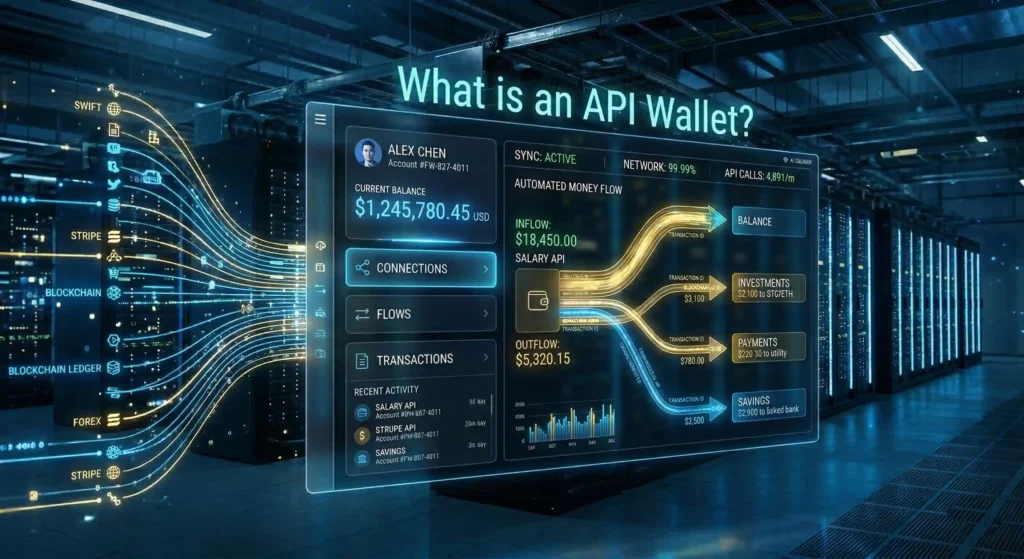
Digital payments are becoming deeply connected with software, automation, and artificial intelligence. Businesses no longer want to process payments manually one by one. They want systems that can handle subscriptions, vendor payouts, customer refunds, and global transactions automatically.
This is where API wallets are becoming important.
An API wallet is not just another payment app. It is a programmable financial system that allows applications, websites, and software platforms to move money automatically using secure APIs.
In 2026, API wallets are powering modern e-commerce platforms, fintech apps, AI agents, gaming ecosystems, subscription businesses, and digital marketplaces. Even small startups now use automated wallet systems to handle thousands of transactions without building a large finance team.
If you are trying to understand how API wallets work, how they differ from traditional digital wallets, and why they matter for the future of digital finance, this guide explains everything from beginner concepts to advanced practical use cases.
Understanding the Basics of Digital Wallets
A digital wallet is an online system used to store money digitally, make payments, receive funds, and track transaction history.
Most people already use digital wallets daily through:
- Mobile payment apps
- Banking applications
- Online shopping platforms
- UPI payment systems
- International payment gateways
Traditional wallets are mainly designed for human interaction. A user opens the app, enters payment details manually, and confirms the transaction.
This works well for personal use, but large digital platforms often need something more advanced.
For example, an online marketplace may need to:
- Accept customer payments
- Split commissions automatically
- Pay sellers instantly
- Issue refunds quickly
- Track thousands of transactions in real time
Doing this manually would create delays and operational complexity. API wallets solve this problem through automation.
What Is an API Wallet?
An API wallet is a digital wallet that can be controlled programmatically through APIs, which allows software systems to send, receive, manage, and automate financial transactions.
In simple words:
- Traditional wallet: Operated manually by a user
- API wallet: Operated automatically by software systems
Instead of logging into an app every time, applications communicate directly with the wallet using secure API requests.
This enables:
- Automatic payment processing
- Instant vendor payouts
- Subscription billing
- Marketplace settlements
- AI-powered financial automation
- Cross-platform transaction management
For example, a freelance platform can automatically release payments to freelancers once a project is approved. A ride-sharing app can split payments between drivers and the platform instantly without manual accounting.
What Is an API? Simple Explanation for Beginners
API stands for Application Programming Interface.
An API acts like a communication bridge between different systems.
Think of it like a waiter in a restaurant:
- You place an order
- The waiter carries the request to the kitchen
- The kitchen prepares the food
- The waiter brings the result back
In digital finance:
- An app sends a payment request
- The API forwards it to the wallet system
- The transaction gets processed securely
- The result returns instantly
Most users never see this process happening because it occurs within seconds behind the scenes.
How an API Wallet Works Step by Step
API wallets operate through secure communication between applications and financial infrastructure.
Step 1: A Transaction Request Is Created
A user, app, or automated system starts a payment request.
Step 2: The Application Sends an API Request
The platform sends secure transaction data to the wallet provider.
Step 3: Authentication Happens
The system checks API keys, authentication tokens, permissions, and security rules.
Step 4: Transaction Processing Begins
The API wallet communicates with banking or payment infrastructure to process the transaction.
Step 5: Instant Response Is Returned
The application receives confirmation about success, failure, or pending status.
All of this typically happens in real time.
Types of API Wallets
Traditional API Wallets
These wallets are connected to banks, payment gateways, or fiat currency systems.
They are commonly used for:
- E-commerce payments
- Payroll automation
- Subscription billing
- Business payouts
Crypto API Wallets
These wallets support blockchain-based assets and cryptocurrencies.
Developers often use them for:
- Crypto exchanges
- NFT platforms
- Blockchain applications
- Web3 payment systems
Hybrid API Wallets
Hybrid systems support both traditional currencies and cryptocurrencies in one platform.
This model is becoming more common as digital finance ecosystems expand.
Key Features of API Wallets
- Automated transactions: Payments happen without manual intervention.
- Real-time processing: Faster settlement and transaction updates.
- Scalable infrastructure: Supports high transaction volumes.
- Secure authentication: Uses API keys, encryption, and tokens.
- Developer-friendly integration: Easily connects with apps and platforms.
- Multi-user support: Handles payouts across large ecosystems.
These features are especially important for modern businesses operating at scale.
Benefits of Using an API Wallet
1. Faster Financial Operations
Transactions can happen instantly without requiring manual approvals for every action.
2. Better Automation
Businesses can automate repetitive payment workflows, which reduces administrative workload.
3. Improved Scalability
API wallets can handle thousands of transactions simultaneously.
4. Lower Operational Costs
Automation reduces dependency on large finance teams for routine processes.
5. Better User Experience
Customers receive faster payments, refunds, and transaction confirmations.
Real-World Use Cases of API Wallets
E-commerce Platforms
Online marketplaces use API wallets to distribute seller payouts automatically after successful deliveries.
Subscription Businesses
Streaming platforms and SaaS companies automate recurring billing every month.
Freelance Marketplaces
Payments can be released instantly once work milestones are approved.
Gaming Platforms
API wallets support in-game purchases, digital rewards, and virtual economies.
AI Agent Systems
Advanced AI assistants in 2026 can now execute limited financial operations through connected API wallets.
For example, an AI system managing online advertising budgets can automatically pay vendors or subscription services within predefined limits.
API Wallet vs Traditional Wallet
| Feature | Traditional Wallet | API Wallet |
|---|---|---|
| Operation Method | Manual user interaction | Software-driven automation |
| Transaction Speed | Moderate | Real-time processing |
| Scalability | Limited | High-volume support |
| Integration Capability | Basic | Advanced API connectivity |
| Business Automation | Minimal | Extensive automation support |
Security in API Wallet Systems
Security is one of the most important parts of API wallet infrastructure.
Modern API wallets usually include:
- Encrypted data transmission
- API authentication keys
- OAuth tokens
- Multi-factor authentication
- Role-based access control
- Fraud detection systems
Professional platforms also use rate limiting and behavioral monitoring to prevent abuse or unauthorized access.
Businesses using API wallets should never expose private API credentials publicly.
Common Risks and Challenges
Security Vulnerabilities
Poorly protected APIs may become targets for cyberattacks.
System Downtime
If payment infrastructure fails, transactions may be delayed.
Compliance Requirements
Financial regulations vary across countries and industries.
API Misconfiguration
Incorrect setup can lead to failed transactions or security issues.
Scalability Challenges
Rapidly growing businesses may need stronger infrastructure as transaction volume increases.
Best Practices for Using API Wallets Safely
- Use strong and regularly rotated API keys
- Enable multi-factor authentication
- Monitor transaction logs continuously
- Limit API permissions where possible
- Conduct regular security audits
- Test systems before scaling heavily
- Use sandbox environments during development
From practical experience, many payment issues in growing startups come from poor testing rather than the wallet system itself. Careful staging and transaction monitoring are extremely important before launching at scale.
Who Should Use API Wallets?
API wallets are especially useful for:
- E-commerce businesses
- Fintech startups
- Subscription platforms
- Freelance marketplaces
- Gaming companies
- AI-powered applications
- Large-scale payment systems
Small personal websites with very few transactions may not immediately need advanced wallet automation.
Future of API Wallets
API wallets are expected to become a major part of global digital finance infrastructure.
Several trends are already shaping the future:
- AI-powered autonomous payments
- Instant cross-border settlement systems
- Blockchain-integrated finance platforms
- Embedded finance inside applications
- Programmable business banking
- Real-time financial automation
In the coming years, software systems will increasingly handle financial operations automatically with minimal manual involvement.
Conclusion
API wallets are transforming how money moves across digital systems. They combine automation, speed, scalability, and programmable finance into one powerful infrastructure layer.
From e-commerce platforms and fintech startups to AI-driven systems and global marketplaces, API wallets are becoming essential for modern digital operations.
Understanding how API wallets work today can help developers, entrepreneurs, and businesses prepare for the future of automated finance and intelligent payment systems.
Frequently Asked Questions
What is the main purpose of an API wallet?
An API wallet allows software systems and applications to automate financial transactions securely without manual processing.
Are API wallets only for developers?
No. Businesses, fintech companies, marketplaces, and automation platforms also use API wallets extensively.
Can API wallets support cryptocurrency?
Yes. Many API wallets now support both traditional currencies and cryptocurrencies.
Are API wallets secure?
They can be highly secure when implemented correctly using encryption, authentication systems, and proper API management practices.
Why are API wallets becoming important in 2026?
Modern businesses increasingly rely on automation, AI systems, and real-time digital finance. API wallets provide the infrastructure needed to support these operations efficiently.